

 Posts
Posts


Unveiling the “Father of Lights”
A Mathematical Reflection on
James 1:17 (KJB)
🔑📖✨
🕊️ tapin2me.com 🕊️
Welcome to another exploration in The Game of Jesus: The King James Bible Decoder.
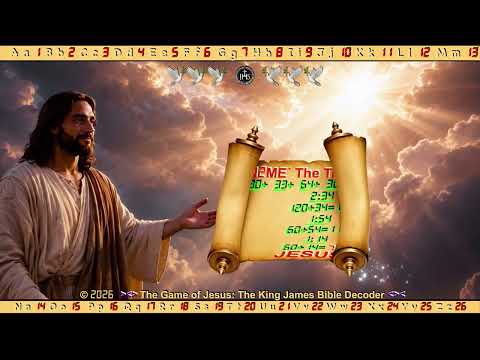
In this study we examine James 1:17 (KJB) and reflect on the phrase “Father of Lights.” Through observation of structure, language, and simple mathematics, we explore how scripture reveals deeper layers of meaning.
“Every good gift and every perfect gift is from above, and cometh down from the Father of lights…”
— James 1:17 (KJB)
Understanding the Passage
The epistle of James, traditionally attributed to James, the brother of Jesus, speaks about faith, wisdom, and the nature of God’s goodness.
In this verse, God is described as the Father of Lights, a title that emphasizes His role as the source of truth, life, and every good gift.
The phrase also reflects the imagery of creation, reminding readers that all light originates from God.
Exploring Structure in Scripture
One aspect of studying scripture involves examining patterns and structure within the text.
Using simple mathematical observations and careful reading, it is possible to reflect on the order and design that appear within biblical language. These observations encourage deeper engagement with the words of scripture.
Even with basic arithmetic and thoughtful reflection, readers can explore how passages like James 1:17 reveal connections throughout the Bible.
The Message of the “Father of Lights”
The title Father of Lights reminds believers that God is the source of all goodness.
Unlike the changing lights of the heavens, scripture declares that God does not change. His character remains constant, faithful, and true.
This verse encourages trust in the divine source of wisdom and blessing.
Reflection
Studying scripture invites us to look more closely at the words that have guided believers for centuries.
By reflecting on passages like James 1:17, readers may gain a deeper appreciation for the themes of light, truth, and divine order found throughout the Bible.
Watch the Video
A visual explanation of this study can be viewed here:



No comments:
Post a Comment